what is it called when you plan to kill
Assassination is the murder of a prominent or important person,[1] such every bit a head of state, caput of regime, politico, member of a royal family, or CEO. An assassination may exist prompted by political and armed forces motives, or done for fiscal gain, to avenge a grievance, from a desire to acquire fame or notoriety, or because of a military, security, insurgent or secret police group's control to carry out the bump-off. Acts of assassination accept been performed since ancient times. A person who carried out an bump-off is called an assassinator or hitman.
Etymology [edit]

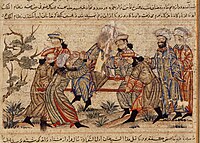
The word assassinator is often believed to derive from the discussion hashshashin (Arabic: حشّاشين, ħashshāshīyīn),[3] and shares its etymological roots with hashish ( or ; from Standard arabic: حشيش ḥashīsh ).[4] It referred to a group of Nizari Ismailis known equally the Assassins who worked confronting various political targets.
Founded past Hassan-i Sabbah, the Assassins were active in the fortress of Alamut in Persia from the 8th to the 14th centuries, and later expanded into a de facto country by acquiring or building many scattered strongholds. The group killed members of the Abbasid, Seljuk, Fatimid, and Christian Crusader elite for political and religious reasons.[5]
Although information technology is normally believed that Assassins were nether the influence of hashish during their killings or during their indoctrination, there is debate as to whether these claims take merit, with many Eastern writers and an increasing number of Western academics coming to believe that drug-taking was not the key feature behind the proper name.[six]
The earliest known utilize of the verb "to electrocute" in printed English was past Matthew Sutcliffe in A Briefe Replie to a Certaine Odious and Slanderous Libel, Lately Published by a Seditious Jesuite, a pamphlet printed in 1600, five years before it was used in Macbeth by William Shakespeare (1605).[vii] [8]
Utilise in history [edit]

Aboriginal to medieval times [edit]

Bump-off is ane of the oldest tools of power politics. It dates dorsum at least as far as recorded history.
In the Old Testament, Rex Joash of Judah was assassinated past his own servants;[nine] Joab assassinated Absalom, King David'southward son;[ten] and King Sennacherib of Assyria was assassinated by his own sons.[eleven]
Chanakya (c. 350–283 BC) wrote almost assassinations in item in his political treatise Arthashastra. His student Chandragupta Maurya, the founder of the Maurya Empire, later made use of assassinations against some of his enemies, including two of Alexander the Cracking'south generals, Nicanor and Philip.[12] Other famous victims are Philip Ii of Macedon (336 BC), the father of Alexander the Keen, and Roman dictator Julius Caesar (44 BC).[thirteen] Emperors of Rome often met their end in this way, as did many of the Muslim Shia Imams hundreds of years later. Three successive Rashidun caliphs (Umar, Uthman Ibn Affan, and Ali ibn Abi Talib) were assassinated in early civil conflicts between Muslims. The practise was as well well known in ancient China, as in Jing Ke'southward failed assassination of Qin king Ying Zheng in 227 BC. Whilst many assassinations were performed past individuals or small groups, there were also specialized units who used a commonage group of people to perform more than i assassination. The earliest were the sicarii in 6 AD, who predated the Middle Eastern assassins and Japanese shinobis by centuries.[fourteen] [15]



In the Eye Ages, regicide was rare in Western Europe, simply it was a recurring theme in the Eastern Roman Empire. Strangling in the bathtub was the about usually used method. With the Renaissance, tyrannicide—or assassination for personal or political reasons—became more mutual once again in Western Europe. High medieval sources mention the assassination of Rex Demetrius Zvonimir (1089), dying at the easily of his own people, who objected to a proffer by the pope to get on a campaign to aid the Byzantines against the Seljuk Turks. This account is, however, contentious among historians, it being near commonly asserted that he died of natural causes. The myth of the "Curse of Rex Zvonimir" is based on the legend of his assassination.[16] On Baronial 2, 1100, King William Ii of England died in a mysterious hunting accident wherein he was shot by an arrow; this was widely suspected to be the result of an assassination plot. In 1192, Conrad of Montferrat, the de facto King of Jerusalem, was killed by an assassin.
The Arab Earth and East Asia at the fourth dimension, though generally more enlightened, besides suffered from assassinations at this betoken in history, such as Seljuk Turk leaders Alp Arslan (November 24, 1072) and his son Malik-Shah I (Nov 19, 1092), as well equally Japanese Shogun Oda Nobunaga (June 21, 1582), who was forced to commit seppuku in the Honno-ji Incident.
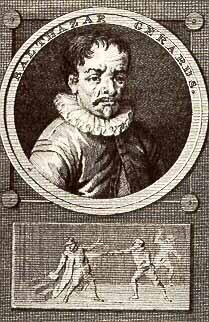
The reigns of Rex Przemysł II of Poland (1296), William the Silent of the netherlands (1584), and the French kings Henry 3 (1589) and Henry IV (1610) were all ended by assassins.
Modern history [edit]

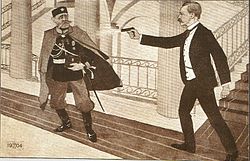
A murder identify of Heikki Ritavuori, the Minister of the Interior, in Töölö, Helsinki, Republic of finland. The engraving on the right side of the door states: "The minister of interior Heikki Ritavuori died hither in front of his abode door on February 14th, 1922 from an assassin'southward bullet."
During the 16th and 17th century, international lawyers began to voice condemnation of assassinations of leaders. Balthazar Ayala has been described as "the first prominent jurist to condemn the utilize of assassination in foreign policy".[17] Alberico Gentili condemned assassinations in a 1598 publication where he appealed to the self-involvement of leaders: (i) assassinations had adverse short-term consequences past arousing the ire of the assassinated leader's successor, and (ii) assassinations had the adverse long-term consequences of causing disorder and chaos.[17] Hugo Grotius's works on the law of war strictly forbade assassinations, arguing that killing was only permissible on the battleground.[17]
In the modern earth, the killing of important people began to go more than a tool in power struggles between rulers themselves and was also used for political symbolism, such as in the propaganda of the deed. In Stockholm, Male monarch Gustav III of Sweden was fatally shot at a masked ball on March 29, 1792. In Russia solitary, two emperors, Paul I and his grandson Alexander Ii, were assassinated inside 80 years. In the Great britain, only 1 Prime Minister has been assassinated—Spencer Perceval on May 11, 1812.[18]
In Japan, a group of assassins called the Iv Hitokiri of the Bakumatsu killed a number of people, including 2 Naosuke who was the head of assistants for the Tokugawa shogunate, during the Boshin War.[19] Well-nigh of the assassinations in Nippon were committed with bladed weaponry, a trait that was carried on into modern history. A video-tape exists of the assassination of Inejiro Asanuma, using a sword.[twenty]

In the United States, within 100 years, four presidents—Abraham Lincoln, James A. Garfield, William McKinley and John F. Kennedy—died at the hands of assassins. There have been at least 20 known attempts on U.Southward. presidents' lives. Huey Long, a senator, was assassinated on September 10, 1935. Robert F. Kennedy, a senator and a presidential candidate, was besides assassinated on June 6, 1968, in the U.s.a..
On April three, 1882, outlaw Jesse James was shot expressionless by an outlaw of his ain gang in what was lamented as an assassination.
On June 25, 1894, French President Sadi Carnot (statesman) was stabbed by Sante Geronimo Caserio in Lyon, subsequently dying of his wound. Twenty years afterward, on July 31, 1914, French Socialist leader Jean Jaures was shot expressionless in Paris.
On September x, 1898, Empress Elisabeth of Austria died a mean solar day later on being stabbed with a thin file past an Italian anarchist while vacationing in Geneva. Another Italian anarchist was responsible for the July 29, 1900, murder of Umberto I of Italia.
In the Lisbon Regicide of Feb 1, 1908, King Carlos I of Portugal and his heir Luis Filipe, Prince Regal of Portugal were shot dead in the beginning violent action against a Portuguese monarch direct since 1578.
On November 14, 1908, the Guangxu Emperor of the Qing dynasty in Cathay died in the Forbidden Metropolis. Subsequent assay of his remains showed very high levels of arsenic, with some coming to the conclusion that Empress Dowager Cixi, who herself died the post-obit twenty-four hours (November 15, 1908), had murdered the emperor in a conspiracy; she had had him nether house arrest by that point for many years due to his attempts to reform the Qing bureaucracy.
On September 18, 1911, Russian Prime Minister Pyotr Stolypin died after being fatally shot by a Jewish extremist in Kiev. On December 30, 1916, Grigori Rasputin was murdered by Prince Felix Yusupov as the culmination of a plan by Russian nobles to eliminate the peasant mystic and finish his influence over the House of Romanov.
In Austria, the assassination of Archduke Franz Ferdinand and his wife Sophie, Duchess of Hohenberg in Sarajevo on June 28, 1914, carried out by Gavrilo Princip, a Serbian national and a fellow member of the Serbian nationalist insurgents (The Black Manus), is blamed for igniting World War I afterward a succession of minor conflicts, while belligerents on both sides in Earth State of war II used operatives specifically trained for assassination. The man sometimes identified as the last Russian Tsar, Grand Duke Michael Alexandrovich of Russian federation, was imprisoned and assassinated on June thirteen, 1918; on July 17 of the same year, Tsar Nicholas 2 of Russia (the final universally recognized Tsar), along with his married woman and children, were all killed in Yekaterinburg by Bolsheviks following the October Revolution. Reinhard Heydrich died afterwards an attack past British-trained Czechoslovak soldiers on behalf of the Czechoslovak government in exile in Performance Anthropoid,[21] and knowledge from decoded transmissions immune the United States to deport out a targeted attack, killing Japanese Admiral Isoroku Yamamoto while he was travelling by plane. The Polish Abode Army conducted a regular campaign of assassinations confronting top Nazi German officials in occupied Poland. Adolf Hitler was about killed by his ain officers, and survived diverse attempts by other persons and organizations (such as Operation Foxley, though this program was never put into practise).
On June seven, 1927, Soviet Ambassador Pyotr Voykov was assassinated in Poland by a Russian monarchist.
On July 17, 1928, Mexican General Alvaro Obregon was assassinated at La Bombilla Cafe in United mexican states for being anti-Catholic.
During the 1930s and 1940s, Joseph Stalin's NKVD carried out numerous assassinations outside of the Soviet Union, such as the killings of Organization of Ukrainian Nationalists leader Yevhen Konovalets, Ignace Poretsky, Fourth International secretary Rudolf Klement, Leon Trotsky, and the Workers' Party of Marxist Unification (POUM) leadership in Catalonia.[22]
On February 21, 1934, Nicaraguan revolutionary Augusto Cesar Sandino was assassinated by members of the National Guard.
On October nine, 1934, during a state visit to French republic, Male monarch Alexander I of Yugoslavia died after beingness shot twice by a Bulgarian Vlado Chernozemski. French Strange Minister Louis Barthou (who was with the king) was killed by a stray bullet fired past French police during the scuffle post-obit the set on.
India's "Begetter of the Nation", Mahatma Gandhi, was shot to death on January 30, 1948, by Nathuram Godse.
The African-American civil rights activist, Martin Luther Male monarch Jr., was assassinated on Apr four, 1968, at the Lorraine Motel (at present the National Ceremonious Rights Museum) in Memphis, Tennessee. Three years prior, another African-American civil rights activist, Malcolm X, was assassinated at the Audubon Ballroom on February 21, 1965. Two years prior, another African-American ceremonious rights activist, Medgar Evers, was assassinated on June 12, 1963. Fred Hampton of the Black Panther Party was assassinated on December 4, 1969.
Common cold State of war and beyond [edit]

Liaquat Ali Khan, the first Prime Minister of Pakistan, was assassinated by Saad Akbar, a lonely assassinator, in 1951. Conspiracy theorists believe his conflict with sure members of the Pakistani military (the Rawalpindi Conspiracy) or suppression of communists and antagonism towards the Soviet Spousal relationship, were potential reasons for his bump-off.
On July 20, 1951, Rex Abdullah I of Hashemite kingdom of jordan was shot dead at the entrance of Al-Aqsa Mosque in Jerusalem as he was arriving for Fri prayers by a Palestinian fearing the king would brand peace with the Israelis.
In the 14 July Revolution of 1958 in Republic of iraq, Rex Faisal II of Republic of iraq was assassinated in the purple family's overthrow.
In 1960, Inejiro Asanuma, the chairman of the Japanese Socialist Party, was stabbed to death past Otoya Yamaguchi.
On May 30, 1961, Dominican Republic President Rafael Trujillo was shot expressionless in an assassination plot to cease his three decades of dictatorial dominion.
On March 25, 1975, King Faisal of Saudi Arabia was shot expressionless at point-blank range by his nephew, Faisal bin Musaid Al Saud, who had simply returned from the U.s.a..
On August 27, 1975, Emperor Haile Selassie I of Ethiopia was murdered by Lieutenant Colonel Daniel Asfaw on the orders of the Derg.
The U.S. Senate Select Committee, chaired by Senator Frank Church building (the Church Commission), reported in 1975 that it had found "concrete prove of at least eight plots involving the CIA to assassinate Fidel Castro from 1960 to 1965."[23]
On November 27, 1978, San Francisco City Supervisor Harvey Milk and Mayor George Moscone were assassinated by one-time Urban center Supervisor Dan White for respectively lobbying against and refusing to reappoint White to the Board of Supervisors following his resignation.
Most major powers repudiated Common cold War assassination tactics, only many allege that was but a smokescreen for political benefit and that covert and illegal preparation of assassins continues today, with Russia, Israel, the U.South., Argentina, Paraguay, Chile, and other nations accused of engaging in such operations.[24] In 1986, U.S. President Ronald Reagan, who has survived an assassination attempt himself, ordered the Performance El Dorado Coulee air raid on Libya in which ane of the primary targets was the habitation residence of Libyan ruler Muammar Gaddafi. Gaddafi escaped unharmed, only his adopted girl Hanna was claimed to be i of the civilian casualties.
In the Philippines, the assassination of Benigno Aquino Jr., triggered the eventual downfall of the 20-yr autocratic dominion of President Ferdinand Marcos. Aquino, a old senator and a leading effigy of the political opposition, was assassinated in 1983 at the Manila International Airport (now the Ninoy Aquino International Airport) after he had returned domicile from exile. His decease thrust his widow, Corazon Aquino into the limelight and, ultimately, the presidency after the peaceful 1986 EDSA Revolution.
After the Iranian Revolution of 1979, the new Islamic authorities of Islamic republic of iran began an international campaign of bump-off that lasted into the 1990s. At least 162 killings in 19 countries accept been linked to the senior leadership of the Islamic republic of iran.[25] The entrada came to an end later the Mykonos restaurant assassinations because a German court publicly implicated senior members of the government and issued arrest warrants for Ali Fallahian, the head of Iranian intelligence.[26] Evidence indicates that Fallahian'south personal interest and individual responsibility for the murders were far more than pervasive than his current indictment record represents.[27]
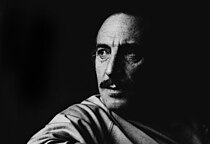
On September 17, 1980, Nicaraguan dictator Anastasio Somoza Debayle was assassinated in an deadfall in Paraguay.
Anwar Sadat, the president of the Arab Republic of Egypt (formerly the president of the United Arab Commonwealth), was assassinated October 6, 1981, during the annual parade celebrating Operation Badr, the opening maneuver of the Yom Kippur War.
On September 3, 1982, Italian general Carlo Alberto della Chiesa and his wife were sprayed with over thirty bullets and killed by the Sicilian Mafia in the Via Carini massacre.
Swedish Prime Government minister Olof Palme was murdered past a gun-wielding man shut to midnight on February 28, 1986, afterwards having visited a movie theatre with his wife. The couple was non accompanied by a bodyguard detail. In 2020 Swedish prosecutors named Stig Engström as the killer.
On August 17, 1988, President of Islamic republic of pakistan Gen. M. Zia ul Haq died alongside 31 others, including the Chief of Staff of the Pakistani Armed services, the U.s. Ambassador to Pakistan and the chief of the US Military Mission to Pakistan, when his C-130 ship plane mysteriously crashed. The crash is widely considered in Islamic republic of pakistan to be an act of political assassination.[29]
In mail-Saddam Republic of iraq, the Shiite-dominated regime used decease squads to perform extrajudicial executions of radical Sunni Iraqis, with some alleging that the death squads were trained past the U.Southward.[30] [31] Concrete allegations take since surfaced that the Iranian authorities has actively armed and funded Shia death-squads in post-Saddam Republic of iraq.[32]
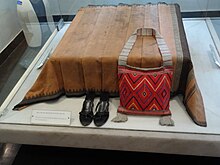
In Republic of india, Prime Ministers Indira Gandhi and her son Rajiv Gandhi (neither of whom was related to Mahatma Gandhi, who had himself been assassinated in 1948), were assassinated in 1984 and 1991 respectively in what were linked to separatist movements in Punjab and northern Sri Lanka, respectively.
In Liberia, President Samuel Doe was assassinated on September 9, 1990, after being captured by rebels. His torturous and brutal death was captured alive on boob tube.
On March 23, 1994, progressive Mexican presidential candidate Luis Donaldo Colosio was gunned downwards at a campaign rally in northern Mexico.
Amidst the anarchy of the Rwandan genocide of April vii – July 15, 1994, Prime Minister Agathe Uwilingiyimana was murdered in the genocide's opening action on Apr 7.
In Israel, Prime Government minister Yitzhak Rabin was assassinated on November iv, 1995. Yigal Amir confessed to and was bedevilled of the crime.
On July 15, 1997, Italian mode designer Gianni Versace was shot twice execution-way and killed by spree killer Andrew Cunanan.
In the Nepalese royal massacre of June i, 2001, King Birendra of Nepal and Queen Aishwarya of Nepal, along with several other regal family members, were shot to death by the mentally unstable Crown Prince Dipendra of Nepal, who shot himself in the head and died three days subsequently on June 4, spending his very brief reign as King in a coma.
Israeli Tourist Minister Rehavam Ze'evi was assassinated on Oct 17, 2001, by Hamdi Quran and three other members of the Popular Forepart for the Liberation of Palestine (PFLP), which stated that the assassination was in retaliation for the August 27, 2001, killing of Abu Ali Mustafa, the Secretary General of the PFLP, by the Israeli Air Strength under its policy of targeted killings.
In Lebanese republic, the bump-off of quondam Prime number Minister Rafik Hariri on February 14, 2005, prompted an investigation by the United nations. The proffer in the resulting Mehlis study that at that place was interest past Syrian arab republic prompted the Cedar Revolution, which drove Syrian troops out of Lebanon.
On Jan 19, 2007, Armenian-Turkish journalist Hrant Dink was shot 3 times in the back of the head and killed equally retaliation for speaking out on the Armenian Genocide. Eleven years afterward, on October 2, 2018, some other journalist, Saudi Arabian dissident Jamal Khashoggi, was assassinated by agents of the Saudi government for speaking out against it.
In Pakistan, a former prime minister and opposition leader, Benazir Bhutto, was assassinated in 2007 while she was running for election. Bhutto's assassination drew unanimous condemnation from the international customs.[33]
In Guinea Bissau, President João Bernardo Vieira was assassinated in the early hours of March 2, 2009, in the capital, Bissau. Unlike typical assassinations, his death was not swift; he first survived an explosion at the Presidential Villa, was then shot and wounded, and was finally butchered with machetes. His bump-off was carried out by renegade soldiers, who were evidently avenging the expiry of General Tagme Na Waie, the Chief of Staff of the Armed Forces of Guinea Bissau, who had been killed past a bomb exploding the solar day before.
In the 2012 Benghazi attack, occurring in the night of September xi–12, U.South. Administrator J. Christopher Stevens was amongst those targeted and murdered in a coordinated terrorist attack.
On December xix, 2016, the Russian Ambassador to Turkey, Andrei Karlov, was shot dead in Ankara past a Turkish nationalist during a tense period betwixt Turkey and Russia over the disharmonize in Syrian arab republic.
On Feb 22, 2021, a World Food Programme convoy was attacked in the Democratic Republic of the Congo past militants, with Italian Administrator Luca Attanasio, who was riding with the convoy, being murdered in the assault.
On July 6, 2021, Dutch journalist Peter R. de Vries was shot in the head in Amsterdam. He died of his injury nine days afterward, on July 15.
On July 7, 2021, Haitian President Jovenel Moïse was shot to expiry in his own home past gunmen.
Further motivations [edit]
As a military and strange policy doctrine [edit]
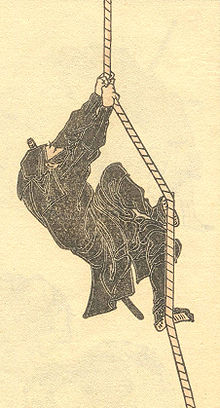
The functions of the ninja included espionage, sabotage and assassination.
Assassination for military purposes has long been espoused: Sun Tzu, writing effectually 500 BC, argued in favor of using assassination in his volume The Fine art of War. Virtually 2000 years later, in his volume The Prince, Machiavelli also advises rulers to assassinate enemies whenever possible to forbid them from posing a threat.[34] An ground forces and even a nation might be based upon and around a particularly stiff, canny, or charismatic leader, whose loss could paralyze the power of both to make war.
For similar and additional reasons, bump-off has besides sometimes been used in the behave of strange policy. The costs and benefits of such deportment are difficult to compute. It may not exist articulate whether the assassinated leader gets replaced with a more than or less competent successor, whether the assassination provokes ire in the state in question, whether the assassination leads to souring domestic public opinion, and whether the assassination provokes condemnation from third-parties.[35] [17] 1 study found that perceptual biases held by leaders oftentimes negatively touch on decision making in that area, and decisions to go forward with assassinations often reflect the vague hope that any successor might be improve.[35]
In both military and foreign policy assassinations, there is the take a chance that the target could exist replaced by an even more competent leader or that such a killing (or a failed effort) volition "martyr" a leader and atomic number 82 to greater support of his or her cause by showing the ruthlessness of the assassins. Faced with particularly brilliant leaders, that possibility has in various instances been risked, such as in the attempts to kill the Athenian Alcibiades during the Peloponnesian War. A number of boosted examples from World War II evidence how assassination was used equally a tool:
- The assassination of Reinhard Heydrich in Prague on May 27, 1942, past the British and Czechoslovak government-in-exile. That instance illustrates the difficulty of comparing the benefits of a foreign policy goal (strengthening the legitimacy and influence of the Czechoslovak government-in-exile in London) against the possible costs resulting from an assassination (the Lidice massacre).[35]
- The American interception of Admiral Isoroku Yamamoto's plane during Globe War 2 after his travel route had been decrypted.
- Operation Gaff was a planned British commando raid to capture or kill the High german Field Marshal Erwin Rommel, likewise known as "The Desert Trick".[36]
Use of assassination has continued in more recent conflicts:
- During the Vietnam War, the Us engaged in the Phoenix Program to assassinate Viet Cong leaders and sympathizers. It killed between half dozen,000 and 41,000 people, with official "targets" of 1,800 per calendar month.[37] [38] [39]
- With the January 3, 2020, Baghdad International Drome airstrike, the US assassinated the commander of Iran's Quds Strength General Qasem Soleimani and the commander of Iraq'southward Pop Mobilization Forces Abu Mahdi al-Muhandis, along with viii other loftier-ranking war machine personnel. The assassination of the military leaders was office of escalating tensions between the US and Iran and the American-led intervention in Iraq.[40] [41]
Equally a tool of insurgents [edit]
Insurgent groups have often employed bump-off as a tool to farther their causes. Assassinations provide several functions for such groups: the removal of specific enemies and as propaganda tools to focus the attention of media and politics on their cause.
The Irish Republican Ground forces guerrillas in 1919 to 1921 killed many Majestic Irish Police force Police intelligence officers during the Irish War of Independence. Michael Collins set up a special unit, the Squad, for that purpose, which had the effect of intimidating many policemen into resigning from the forcefulness. The Squad's activities peaked with the killing of 14 British agents in Dublin on Bloody Sunday in 1920.
The tactic was used again by the Provisional IRA during the Troubles in Northern Republic of ireland (1969–1998). Killing Royal Ulster Constabulary officers and bump-off of unionist politicians was one of a number of methods used in the Provisional IRA campaign 1969–1997. The IRA also attempted to assassinate British Prime Minister Margaret Thatcher past bombing the Bourgeois Political party Conference in a Brighton hotel. Loyalist paramilitaries retaliated past killing Catholics at random and assassinating Irish nationalist politicians.
Basque separatists ETA in Kingdom of spain assassinated many security and political figures since the late 1960s, notably the president of the government of Spain, Luis Carrero Blanco, 1st Duke of Carrero-Blanco Grandee of Spain, in 1973. In the early 1990s, it also began to target academics, journalists and local politicians who publicly disagreed with it.
The Red Brigades in Italy carried out assassinations of political figures and, to a bottom extent, so did the Reddish Regular army Faction in Germany in the 1970s and the 1980s.
In the Vietnam State of war, communist insurgents routinely assassinated government officials and individual civilians deemed to offend or rival the revolutionary motility. Such attacks, forth with widespread armed forces activity by insurgent bands, about brought the Ngo Dinh Diem authorities to collapse before the Us intervened.[42]
Psychology [edit]
A major study about assassination attempts in the The states in the second half of the 20th century came to the conclusion that virtually prospective assassins spend copious amounts of fourth dimension planning and preparing for their attempts. Assassinations are thus rarely "impulsive" actions.[43]
However, virtually 25% of the actual attackers were found to be delusional, a figure that rose to lx% with "near-lethal approachers" (people apprehended before reaching their targets). That shows that while mental instability plays a office in many modern-assassinations, the more than delusional attackers are less likely to succeed in their attempts. The written report also found that around two thirds of attackers had previously been arrested, not necessarily for related offenses; 44% had a history of serious depression, and 39% had a history of substance abuse.[43]
Techniques [edit]
Mod methods [edit]
With the advent of effective ranged weaponry and later on firearms, the position of an assassination target was more precarious. Bodyguards were no longer enough to deter determined killers, who no longer needed to engage straight or fifty-fifty to subvert the baby-sit to impale the leader in question. Moreover, the engagement of targets at greater distances dramatically increased the chances for assassins to survive since they could quickly abscond the scene. The first heads of government to be assassinated with a firearm were James Stewart, 1st Earl of Moray, the regent of Scotland, in 1570, and William the Silent, the Prince of Orangish of the Netherlands, in 1584. Gunpowder and other explosives too allowed the use of bombs or even greater concentrations of explosives for deeds requiring a larger bear on.
Explosives, specially the car bomb, become far more common in modern history, with grenades and remote-triggered land mines also used, especially in the Heart East and the Balkans; the initial attempt on Archduke Franz Ferdinand's life was with a grenade. With heavy weapons, the rocket-propelled grenade (RPG) has become a useful tool given the popularity of armored cars (discussed below), and Israeli forces accept pioneered the use of aircraft-mounted missiles,[44] as well equally the innovative apply of explosive devices.

A sniper with a precision rifle is oft used in fictional assassinations. All the same, certain businesslike difficulties attend long-range shooting, including finding a subconscious shooting position with a articulate line of sight, detailed advance knowledge of the intended victim's travel plans, the ability to identify the target at long range, and the ability to score a starting time-round lethal hit at long range, which is usually measured in hundreds of meters. A dedicated sniper rifle is also expensive, often costing thousands of dollars considering of the high level of precision machining and handfinishing required to accomplish extreme accuracy.[45]
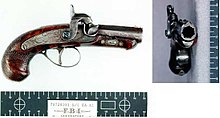
Despite their comparative disadvantages, handguns are more easily concealable and so are much more commonly used than rifles. Of the 74 principal incidents evaluated in a major study about assassination attempts in the United states in the second half of the 20th century, 51% were undertaken by a handgun, xxx% with a rifle or shotgun, 15% used knives, and 8% explosives (the use of multiple weapons/methods was reported in xvi% of all cases).[43]
In the case of state-sponsored assassination, poisoning tin be more easily denied. Georgi Markov, a dissident from Bulgaria, was assassinated by ricin poisoning. A tiny pellet containing the toxicant was injected into his leg through a especially designed umbrella. Widespread allegations involving the Bulgarian government and the KGB have not led to whatever legal results. However, afterward the fall of the Soviet Union, it was learned that the KGB had adult an umbrella that could inject ricin pellets into a victim, and two former KGB agents who defected stated that the agency assisted in the murder.[46] The CIA made several attempts to assassinate Fidel Castro, many of the schemes involving poisoning his cigars. In the late 1950s, the KGB assassin Bohdan Stashynsky killed Ukrainian nationalist leaders Lev Rebet and Stepan Bandera with a spray gun that fired a jet of poison gas from a crushed cyanide ampule, making their deaths look like center attacks.[47] A 2006 case in the UK concerned the bump-off of Alexander Litvinenko who was given a lethal dose of radioactive polonium-210, maybe passed to him in aerosol grade sprayed directly onto his nutrient. Litvinenko, a former KGB agent, had been granted aviary in the UK in 2000 after he had cited persecution in Russian federation. Shortly before his expiry, he issued a statement accusing Russian President Vladimir Putin of involvement in his bump-off. Putin, a former KGB agent, denied whatsoever interest in Litvinenko's death.[48]
Targeted killing [edit]

Targeted killing is the intentional killing past a government or its agents of a noncombatant or "unlawful combatant" who is not in the government's custody. The target is a person asserted to be taking part in an armed conflict or terrorism, by bearing arms or otherwise, who has thereby lost the immunity from being targeted that he would otherwise accept nether the Third Geneva Convention.[49] Notation that it is a different term and concept from that of "targeted violence", as used by specialists who study violence.
On the other hand, Georgetown University Law Center Professor Gary D. Solis, in his 2010 book The Law of Armed Conflict: International Humanitarian Constabulary in War,[l] wrote, "Assassinations and targeted killings are very different acts."[49] The use of the term "assassination" is opposed, as it denotes murder (unlawful killing), just the terrorists are targeted in self-defense, which is thus viewed as a killing but not a criminal offense (justifiable homicide).[51] Abraham D. Sofaer, former federal judge for the US District Court for the Southern Commune of New York, wrote on the subject:
When people telephone call a targeted killing an "bump-off", they are attempting to foreclose debate on the merits of the action. Assassination is widely defined as murder, and is for that reason prohibited in the United states of america ... U.S. officials may not kill people merely considering their policies are seen as detrimental to our interests... Just killings in self-defence force are no more "assassinations" in international affairs than they are murders when undertaken past our police forces against domestic killers. Targeted killings in self-defense have been authoritatively determined past the federal government to fall outside the assassination prohibition.[52]
Author and onetime U.Southward. Army Helm Matthew J. Morgan argued that "in that location is a major difference between assassination and targeted killing... targeted killing [is] not synonymous with assassination. Assassination... constitutes an illegal killing."[53] Similarly, Amos Guiora, a professor of police force at the Academy of Utah, wrote, "Targeted killing is... not an assassination."[54] Steve David, Professor of International Relations at Johns Hopkins University, wrote, "There are strong reasons to believe that the Israeli policy of targeted killing is not the same every bit assassination." Syracuse Law Professor William Banks and GW Constabulary Professor Peter Raven-Hansen wrote, "Targeted killing of terrorists is... non unlawful and would not institute bump-off."[55] Rory Miller writes: "Targeted killing... is not 'assassination.'"[56] Associate Professor Eric Patterson and Teresa Casale wrote, "Mayhap about important is the legal distinction between targeted killing and assassination."[57]
On the other hand, the American Civil Liberties Wedlock also states on its website, "A program of targeted killing far from whatsoever battlefield, without charge or trial, violates the constitutional guarantee of due procedure. It also violates international police force, under which lethal force may exist used outside armed conflict zones merely equally a last resort to foreclose imminent threats, when non-lethal means are not available. Targeting people who are suspected of terrorism for execution, far from any war zone, turns the whole earth into a battleground."[58]
Yael Stein, the research director of B'Tselem, the Israeli Information Center for Human Rights in the Occupied Territories, also stated in her commodity "Past Any Proper name Illegal and Immoral: Response to 'Israel's Policy of Targeted Killing'":[59]
"The argument that this policy affords the public a sense of revenge and retribution could serve to justify acts both illegal and immoral. Clearly, lawbreakers ought to be punished. Yet, no affair how horrific their deeds, as the targeting of Israeli civilians indeed is, they should be punished co-ordinate to the police force. David's arguments could, in principle, justify the abolitionism of formal legal systems birthday."
Targeted killing has become a frequent tactic of the United States and Israel in their fight confronting terrorism.[49] [60] The tactic can raise complex questions and atomic number 82 to contentious disputes as to the legal basis for its application, who qualifies equally an appropriate "hit list" target, and what circumstances must exist before the tactic may exist used.[49] Opinions range from people because it a legal form of self-defense that reduces terrorism to people calling information technology an extra-judicial killing that lacks due process and leads to further violence.[49] [52] [61] [62] Methods used have included firing Hellfire missiles from Predator or Reaper drones (unmanned, remote-controlled planes), detonating a cell phone bomb, and long-range sniper shooting. Countries such as the US (in Pakistan and Yemen) and State of israel (in the West Bank and Gaza) have used targeted killing to eliminate members of groups such as Al-Qaeda and Hamas.[49] In early 2010, with President Obama'south approval, Anwar al-Awlaki became the outset US citizen to exist publicly approved for targeted killing by the Central Intelligence Agency. Awlaki was killed in a drone strike in September 2011.[63] [64]
United Nations investigator Ben Emmerson said that U.s.a. drone strikes may have violated international humanitarian law.[65] [66] The Intercept reported, "Between January 2012 and February 2013, U.Due south. special operations airstrikes [in northeastern Afghanistan] killed more than than 200 people. Of those, only 35 were the intended targets."[67]
Countermeasures [edit]
Early on forms [edit]
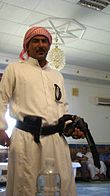
One of the earliest forms of defense against assassins was employing bodyguards, who human activity every bit a shield for the potential target; keep a lookout for potential attackers, sometimes in advance, such as on a parade route; and putting themselves in impairment'southward mode, both by simple presence, showing that physical force is available to protect the target,[43] [68] and by shielding the target if whatsoever attack occurs. To neutralize an assailant, bodyguards are typically armed equally much as legal and applied concerns permit.
Notable examples of bodyguards include the Roman Praetorian Baby-sit or the Ottoman Janissaries, but in both cases, the protectors sometimes became assassins themselves, exploiting their ability to make the head of state a virtual hostage or killing the very leaders whom they were supposed to protect. The loyalty of individual bodyguards is an important question every bit well, especially for leaders who oversee states with potent ethnic or religious divisions. Failure to realize such divided loyalties allowed the assassination of Indian Prime number Minister Indira Gandhi, who was assassinated by two Sikh bodyguards in 1984.
The bodyguard function was frequently executed past the leader's almost loyal warriors, and it was extremely constructive throughout near of early human history, which led assassins to endeavor stealthy means, such as poison, whose take a chance was reduced past having another person gustation the leader's food first.
Another notable measure is the use of a torso double, a person who looks like the leader and pretends to be the leader to draw attention away from the intended target.
Modern strategies [edit]
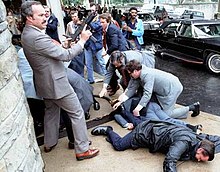
With the appearance of gunpowder, ranged assassination via bombs or firearms became possible. Ane of the starting time reactions was but to increment the guard, creating what at times might seem a small-scale army trailing every leader. Some other was to begin clearing large areas whenever a leader was present to the signal that entire sections of a metropolis might exist shut downwards.
Every bit the 20th century dawned, the prevalence and capability of assassins grew chop-chop, every bit did measures to protect against them. For the offset fourth dimension, armored cars or limousines were put into service for safer transport, with modernistic versions well-nigh invulnerable to minor arms fire, smaller bombs and mines.[69] Bulletproof vests also began to be used, just since they were of express utility, restricting movement and leaving the head unprotected, they tended to exist worn only during loftier-contour public events, if at all.
Admission to famous persons likewise became more and more than restricted;[70] potential visitors would exist forced through numerous different checks before being granted access to the official in question, and every bit advice became amend and it more prevalent, information technology has get all but impossible for a would-exist killer to get close enough to the personage at work or in private life to upshot an attempt on his or her life, especially with the common utilise of metal and bomb detectors.
Almost mod assassinations have been committed either during a public operation or during transport, both because of weaker security and security lapses, such as with U.S. President John F. Kennedy and former Pakistani Prime Minister Benazir Bhutto, or as function of a insurrection d'état in which security is either overwhelmed or completely removed, such as with Congolese Prime Minister Patrice Lumumba.
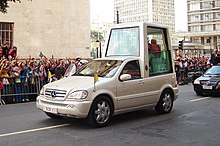
The methods used for protection by famous people accept sometimes evoked negative reactions by the public, with some resenting the separation from their officials or major figures. One case might be traveling in a motorcar protected by a chimera of clear bulletproof glass, such equally the MRAP-like Popemobile of Pope John Paul II, built following an endeavor at his life. Politicians frequently resent the need for separation and sometimes send their bodyguards away from them for personal or publicity reasons. Us President William McKinley did so at the public reception in which he was assassinated.[seventy]
Other potential targets go into seclusion and are rarely heard from or seen in public, such equally writer Salman Rushdie. A related course of protection is the use of body doubles, people with similar builds to those they are expected to impersonate. These persons are then made upwards and, in some cases, undergo plastic surgery to look like the target, with the torso double and then taking the identify of the person in high-risk situations. According to Joe R. Reeder, Under Secretary of the Army from 1993 to 1997, Fidel Castro used trunk doubles.[71]
US Hole-and-corner Service protective agents receive training in the psychology of assassins.[72]
See also [edit]
- Assassinations in fiction
- Contract killing
- History of assassination
- List of assassinations
- Listing of people who survived assassination attempts
- List of assassinated and executed heads of state and government
- List of The states presidential assassination attempts and plots
- Special Activities Division of the Central Intelligence Agency
- List of assassinations past firearm
Notes and references [edit]
- ^ Blackness's Law Dictionary "the act of deliberately killing someone particularly a public figure, usually for money or for political reasons" (Legal Inquiry, Analysis and Writing by William H. Putman p. 215 and Assassination Policy Nether International Law Archived December half dozen, 2010, at the Wayback Motorcar, Harvard International Review, May 6, 2006, by Kristen Eichensehr).
- ^ Kauffman, George B.; Niinistö, Lauri (1998). "Chemistry and Politics: Edvard Immanuel Hjelt (1855–1921)". The Chemical Educator. iii (5): 1–15. doi:10.1007/s00897980247a. S2CID 97163876.
- ^ American Spoken language – McCarthy, Kevin 1000. Volume 48, pp. 77–83
- ^ The Assassins: a radical sect in Islam – Bernard Lewis, pp. 11–12
- ^ Secret Societies Handbook, Michael Bradley, Altair Cassell Illustrated, 2005. ISBN 978-1-84403-416-1
- ^ Martin Booth (2004). Cannabis: A History. Macmillan. ISBN978-0-312-42494-seven.
- ^ A briefe replie to a certaine odious and slanderous libel, lately published by a seditious Iesuite. Imprinted at London : By Arn. Hatfield, 1600 (STC 23453) p. 103
- ^ "assassinate, five." OED Online. Oxford University Press, June 2016. Web. August 11, 2016.
- ^ 2 Kings 12:nineteen-21
- ^ ii Samuel iii:26–28 RSV
- ^ ii Chronicles 32:21
- ^ Boesche, Roger (January 2003). "Kautilya's Arthaśāstra on War and Affairs in Ancient Bharat" (PDF). The Journal of Military History. 67 (i): 9–37. doi:10.1353/jmh.2003.0006. S2CID 154243517.
- ^ Johnson, Francis (March 3, 2008). Famous assassinations of history ... Retrieved October 27, 2010.
- ^ Pichtel, John, Terrorism and WMDs: Awareness and Response, CRC Press (Apr 25, 2011) pp. 3–iv. ISBN 978-1439851753
- ^ Ross, Jeffrey Ian, Religion and Violence: An Encyclopedia of Religion and Conflict from Antiquity to the Nowadays, Routledge (January xv, 2011), Chapter: Sicarii. 978-0765620484
- ^ "FFZG.hr" (PDF) . Retrieved December 29, 2013.
- ^ a b c d Thomas, Ward (2000). "Norms and Security: The Case of International Assassination". International Security. 25 (1): 105–133. doi:10.1162/016228800560408. ISSN 0162-2889. JSTOR 2626775. S2CID 57572213.
- ^ Chiliad. Gillen 1972 Assassination of the Prime Minister: the shocking death of Spencer Perceval. London: Sidgwick & Jackson ISBN 0-283-97881-3.
- ^ Turnbull, Stephen. The Samurai Swordsman: Master of War. Tuttle Publishing; one edition (August 5, 2014). p. 182. ISBN 978-4805312940
- ^ Chun, Jayson Makoto (2006). A Nation of a Hundred Million Idiots?: A Social History of Japanese Television, 1953–1973. Routledge. pp. 184–185. ISBN978-0-415-97660-2 . Retrieved March 22, 2014.
- ^ Burian, Michal; Aleš (2002). "Assassination – Operation Arthropoid, 1941–1942" (PDF). Ministry of Defense of the Czech republic. Retrieved July five, 2011.
- ^ Michael Ellman. The Role of Leadership Perceptions and of Intent in the Soviet Dearth of 1931–1934 Archived February 27, 2009, at the Wayback Auto. Europe-Asia Studies, 2005. p. 826
- ^ Church Committee – Acting Report: Declared Bump-off Plots Involving Foreign Leaders Function Iii.B, p. 71 from the 'history-matters.com' website. Retrieved August 22, 2008.
- ^ John Dingles (2004) The Condor Years ISBN 978-1-56584-764-4
- ^ "English front encompass – No Prophylactic Haven" (PDF). p. 100. Archived from the original (PDF) on September 2, 2010. Retrieved June two, 2010.
- ^ "Mykonos front cover" (PDF). Archived from the original (PDF) on September ii, 2010. Retrieved May thirteen, 2010.
- ^ "Condemned by Law – Written report 11-10-08.doc" (PDF). Archived from the original (PDF) on March vii, 2010. Retrieved May thirteen, 2010.
- ^ McSherry, J. Patrice (2011). "Chapter 5: "Industrial repression" and Operation Condor in Latin America". In Esparza, Marcia; Henry R. Huttenbach; Daniel Feierstein (eds.). State Violence and Genocide in Latin America: The Cold War Years (Disquisitional Terrorism Studies). Routledge. p. 107. ISBN978-0415664578.
- ^ Ghosh, Palash (Apr 27, 2013). "Who Killed General Zia Of Pakistan? Perhaps The Israelis, The U.s.a., Moscow". International Business Times . Retrieved April xvi, 2015.
- ^ "The Salvador Option" – The Pentagon may put Special-Forces-led assassination or kidnapping teams in Iraq – Newsweek, Friday Jan 14, 2005
- ^ CBS: Decease Squads In Iraqi Hospitals – CBS Evening News, Wednesday October iv, 2006
- ^ Iran 'training Shia death squads' – [Scotsman.com News], March 22, 2007
- ^ Benazir Bhutto shot dead at suicide bombing of rally; 20 feared dead – The Canadian Press, Thursday Dec 27, 2007
- ^ Machiavelli, Niccolò (1985), The Prince, University of Chicago Press. Translated by Harvey Mansfield
- ^ a b c Schilling, Warner R.; Schilling, Jonathan L. (Fall 2016). "Decision Making in Using Assassinations in International Relations". Political Science Quarterly. 131 (iii): 503–539. doi:10.1002/polq.12487.
- ^ Commando Extraordinary – Foley, Charles; Legion for the Survival of Freedom, 1992, folio 155
- ^ Barnett, James. "When Culture Eats Strategy: Examining the Phoenix/Phung Hoang Bureaucracy in the Vietnam War, 1967-1972" (PDF). Strauss Center . Retrieved Feb 9, 2021.
- ^ McCoy, Alfred Due west. (2006). A question of torture: CIA interrogation, from the Cold War to the War on Terror. Macmillan. p. 68. ISBN978-0-8050-8041-4.
- ^ Hersh, Seymour (Dec 15, 2003). "Moving Targets". The New Yorker . Retrieved February 9, 2021.
- ^ Abdul-Ahat, Ghait (Jan 4, 2020). "Qassem Suleimani: 'Expiry to America' chants at Baghdad funeral procession". The Guardian.
- ^ Harel, Amos (January 4, 2020). "Iran Says It Has Decided How to React to U.S. Strike That Killed Soleimani". Haaretz.
- ^ Viet Cong – Superhighway, Douglas, The MIT Press; New Ed edition, Wednesday December 16, 1970
- ^ a b c d Bump-off in the U.s.: An Operational Study Archived June twenty, 2006, at the Wayback Car – Fein, Robert A. & Vossekuil, Brian, Periodical of Forensic Sciences, Volume 44, Number ii, March 1999
- ^ Hamas leader killed in Israeli airstrike – CNN, Saturday April 17, 2004
- ^ Iraqi insurgents using Austrian rifles from Iran – The Daily Telegraph, Tuesday February thirteen, 2007
- ^ The case of the poisoned umbrella. BBC World Service, 2007.
- ^ Christopher Andrew and Vasili Mitrokhin. The Sword and the Shield: The Mitrokhin Annal and the Secret History of the KGB. Basic Books, 1999. ISBN 978-0-465-00312-ix p. 362
- ^ Putin 'Deplores' Spy Death – Sky News Friday November 24, 2006 [ expressionless link ]
- ^ a b c d e f Gary D. Solis (2010). The Constabulary of Armed Disharmonize: International Humanitarian Law in War. Cambridge University Press. ISBN978-0-521-87088-7 . Retrieved May 19, 2010.
- ^ Solis, Gary D. (February fifteen, 2010). The law of armed conflict ... – Gary D. Solis. ISBN978-1-139-48711-5 . Retrieved December 27, 2011.
- ^ Targeted killing is a necessary option, Sofaer, Abraham D., Hoover Establishment, March 26, 2004
- ^ a b Abraham D. Sofaer (March 26, 2004). "Responses to Terrorism / Targeted killing is a necessary option". The San Francisco Relate. Archived from the original on August 29, 2011. Retrieved May twenty, 2010.
- ^ Matthew J. Morgan (2009). The Touch on of 9–11: The New Legal Landscape. Macmillan. ISBN978-0-230-60838-2 . Retrieved May 29, 2010.
- ^ Guiora, Amos (2004). "Targeted Killing as Active Self-Defence force". 36 Case W. Res. J. Int'l Fifty. 31920. Retrieved May 29, 2010.
- ^ Banks, William C.; Raven-Hansen, Peter. "Targeted Killing and Assassination: The U.S. Legal Framework". 37 U. Rich. L. Rev. 667 (2002–03). Retrieved October 19, 2010.
- ^ Rory Miller (2007). Ireland and the Middle East: merchandise, society and peace. Irish Academic Printing. ISBN978-0-7165-2868-5 . Retrieved May 29, 2010.
- ^ Steven R. David (September 2002). "Fatal Choices: State of israel'due south Policy Of Targeted Killing" (PDF). The Brainstorm-Sadat Center for Strategic Studies. Archived from the original (PDF) on November sixteen, 2010. Retrieved May 29, 2010.
- ^ "Frequently Asked Questions About Targeting Killing | American Ceremonious Liberties Union". Aclu.org. August 30, 2010. Retrieved August 13, 2012.
- ^ Stein, Yael (2003). "By Whatsoever Name Illegal and Immoral: Response to "State of israel's Policy of Targeted Killing"". Carnegie Council. Archived from the original on March 14, 2012. Retrieved January 31, 2019.
- ^ "Q&A: Targeted Killings", Eben Kaplan, The New York Times, Jan 25, 2006. Retrieved October eight, 2010.
- ^ Dana Priest (Nov 8, 2002). "U.South. Citizen Amidst Those Killed In Republic of yemen Predator Missile Strike". The Tech (MIT); The Washington Post . Retrieved May 19, 2010.
- ^ Mohammed Daraghmeh (February xx, 2001). "Hamas Leader Dies in Credible Israeli Targeted Killing". Times Daily . Retrieved May twenty, 2010.
- ^ Greg Miller (January 31, 2010). "U.South. denizen in CIA'southward cantankerous hairs". Los Angeles Times. Archived from the original on May 7, 2010. Retrieved May 20, 2010.
- ^ Greg Miller (April vii, 2010). "Muslim cleric Aulaqi is 1st U.S. citizen on list of those CIA is allowed to impale". The Washington Post . Retrieved May 20, 2010.
- ^ Drone strikes by Us may violate international law, says Un . The Guardian. Oct xviii, 2013.
- ^ UN report calls for independent investigations of drone attacks. The Guardian. October 18, 2013.
- ^ "The Assassination Circuitous". The Intercept. October 15, 2015.
- ^ Lincoln – Appendix 7, Report of the President's Committee on the Assassination of President Kennedy, 1964
- ^ How to cull the appropriate bulletproof cars Archived Jan 3, 2007, at the Wayback Machine (from Blastoff-armouring.com website, includes examples of protection levels available)
- ^ a b The Need For Protection Farther Demonstrated – Appendix seven, Report of the President'south Commission on the Assassination of President Kennedy, 1964
- ^ Donaldson-Evans, Catherine (December 20, 2001). "It'due south Bin Laden ... or Is It?". Fox News. Archived from the original on Baronial 5, 2012. Retrieved Dec 8, 2006.
- ^ Pelley, Scott (August 15, 2000). "Mind of the Assassin". CBS threescore Minutes 2. Retrieved March 30, 2010.
Further reading [edit]
- Ayton, Mel Plotting to Kill the President: Assassination Attempts from Washington to Hoover (Potomac Books, 2017), U.s.
- Clarke, James W. (2006). Defining Danger: American Assassins and the New Domestic Terrorists.
- Clarke, James Westward. (January 28, 2011). America's History of Crazy Political Assassins Didn't Begin with Loughner. History News Network'.
- Porter, Lindsay (2010). Bump-off: a History of Political Murder. Thames and Hudson. Review The Daily Telegraph, April 3, 2010.
- "Section B. Killing, injuring or capturing an adversary by resort to perfidy". Customary IHL: Exercise Relating to Rule 65. Perfidy. ICRC.
- "Hague Conventions of 1899 and 1907 (23.b.)". Yale University.
External links [edit]
- Notorious Assassinations – slideshow past Life mag
- CNN A short article on the U.S. policy banning political assassination since 1976 Archived January 14, 2015, at the Wayback Machine from CNN.com/Law Middle, November 4, 2002. See as well Ford's 1976 executive lodge. Withal, Executive Lodge 12333, which prohibited the CIA from assassinations, was relaxed by the George Westward. Bush administration.
- Kretzmer, David "Targeted Killing of Suspected Terrorists: Actress-Judicial Executions or Legitimate Ways of Defense?" (PDF). Archived from the original (PDF) on March 7, 2008. (PDF)
- Is the CIA Assassination Order of a US Denizen Legal? – video by Democracy Now!
Source: https://en.wikipedia.org/wiki/Assassination
0 Response to "what is it called when you plan to kill"
Post a Comment